
How Recycled Plastic Outdoor Seating is Shaping the Future of Sustainable Airport Design in India
As India builds world-class infrastructure for the future, sustainability can no longer be an afterthought—it must be built into every project from the ground up.
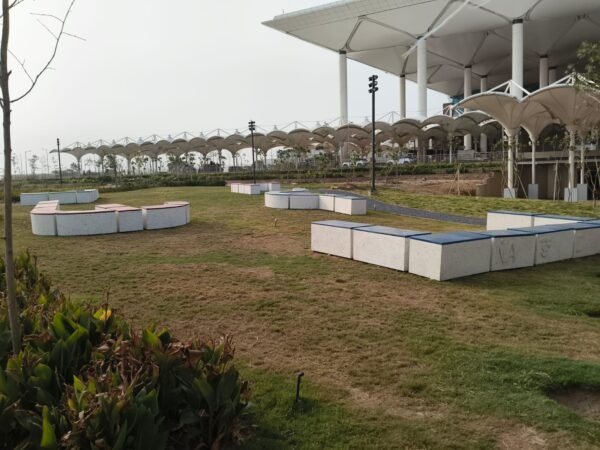
At Noida International Airport, one of India’s most ambitious aviation projects, sustainability is becoming visible in everyday passenger experiences. From the moment travelers arrive, they are greeted by infrastructure that tells a powerful story of innovation, circular design, and resource efficiency.
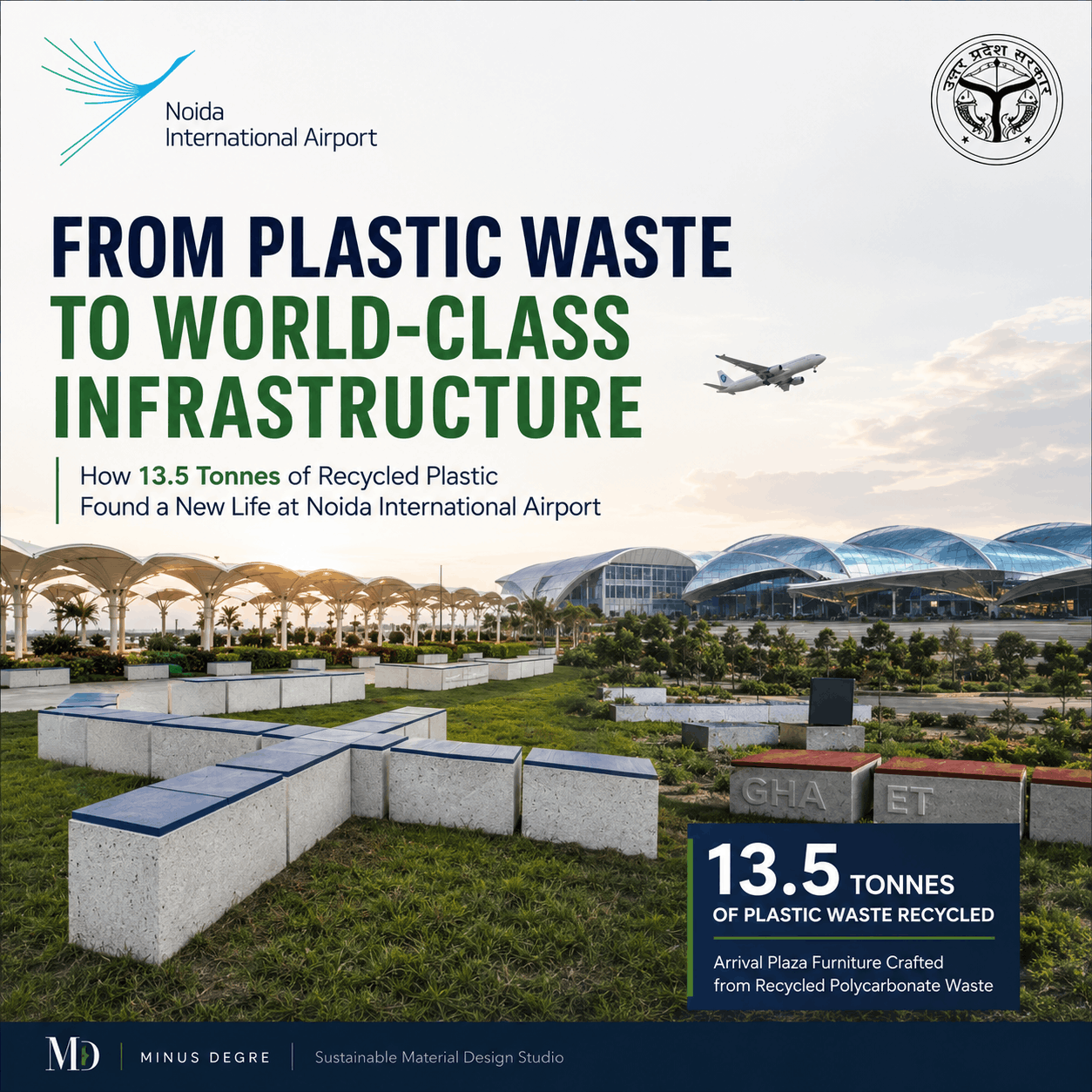
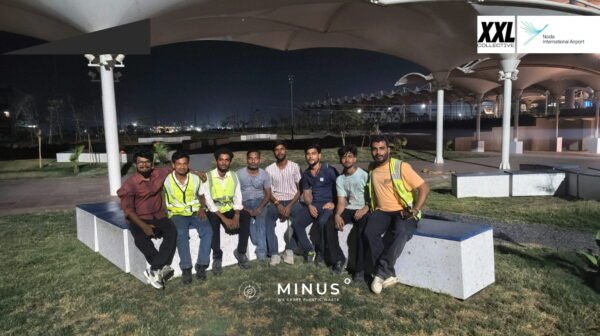
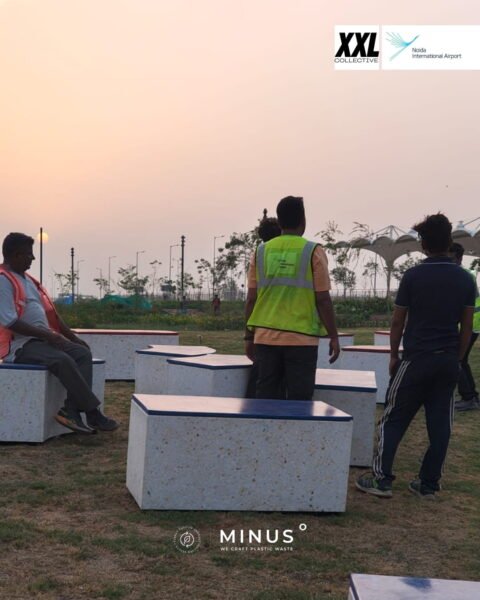
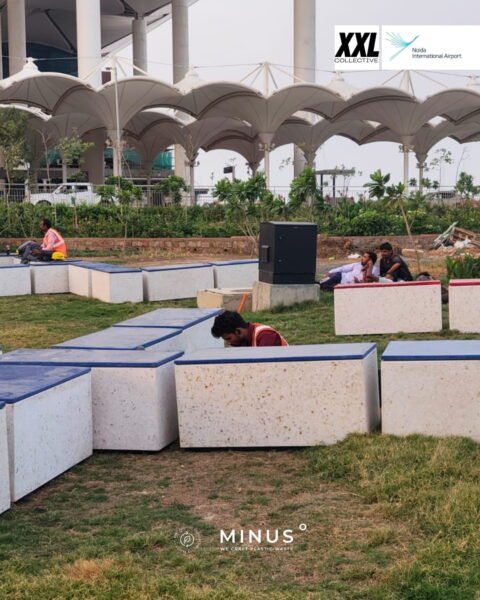
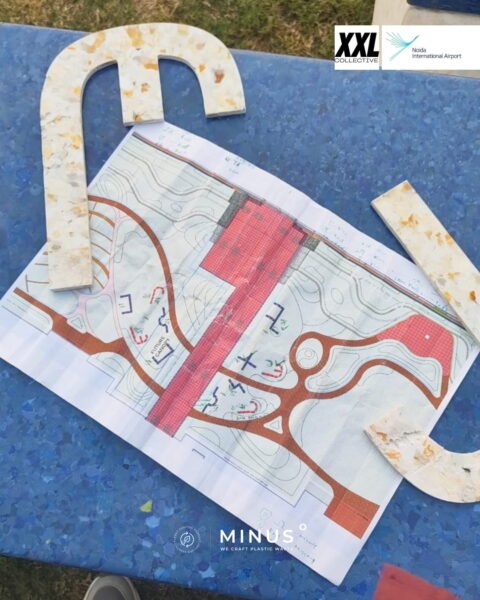
Minus Degre is proud to have designed and manufactured 90+ custom seating modules and 2 information plaques for the Arrival Zone of Noida International Airport, demonstrating how recycled materials can be beautiful, durable, and engineered for large-scale public infrastructure.
This project stands as a real-world example of how waste can be transformed into functional design while supporting India’s broader sustainability ambitions.
Sustainable Public Furniture Made from Recycled Polycarbonate Waste
What makes this project unique is not just its design but the material behind it.
Each seating module is manufactured from 100% recycled polycarbonate waste, a high-performance engineering plastic known for its exceptional strength, impact resistance, UV stability, and long-term durability.
The project utilizes two valuable waste streams that would otherwise have limited end-of-life applications:
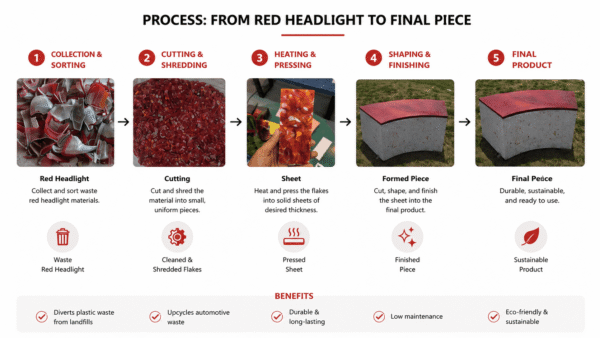
From Automotive Waste to Airport Infrastructure
The upper seating surface is crafted using recycled polycarbonate recovered from discarded automotive tail lights and rear light components.
Originally designed to withstand years of sunlight, rain, heat, and environmental exposure, these materials offer exceptional performance for outdoor public seating applications.
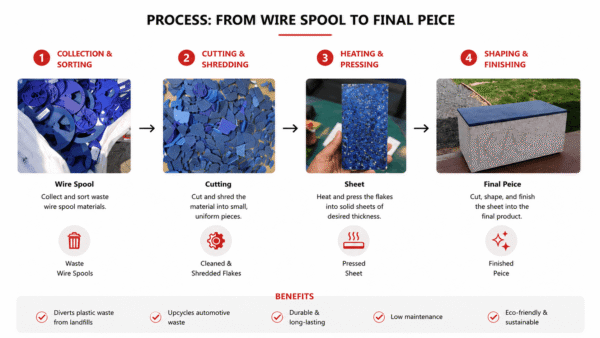
Giving Electronic Waste a Second Life
The base structure of each module is manufactured using recycled polycarbonate sourced from discarded chargers, adapters, and electronic accessories.
Instead of being discarded or sent to landfill, this material has been transformed into high-performance infrastructure capable of serving thousands of airport passengers every day.
Together, these waste streams showcase how circular economy principles can create value from materials often considered difficult to recycle.
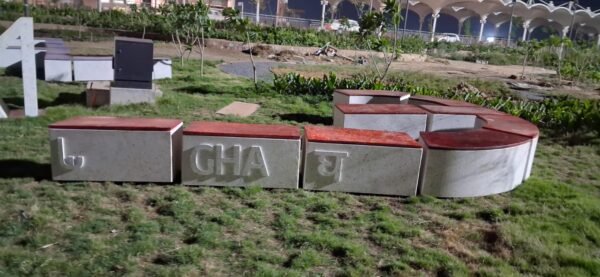
More Than Seating: A Circular Economy Infrastructure Project
Each seating module contains approximately 80 kilograms of hard plastic waste, carefully processed and transformed into durable public furniture.
With over 90 seating modules installed, the project has successfully diverted more than 13.5 tonnes of plastic waste from potential landfill disposal and environmental leakage.
This is a practical demonstration of circular economy infrastructure in India—where waste materials are redesigned, remanufactured, and reintegrated into the built environment.
At a time when cities and infrastructure developers are searching for sustainable alternatives to conventional materials, projects like this prove that recycled materials can meet both performance and aesthetic requirements.
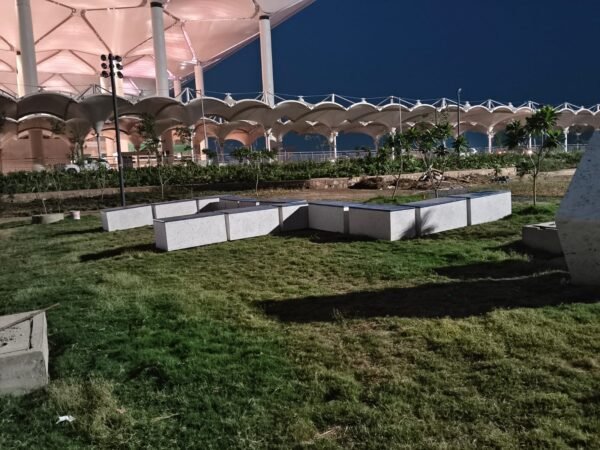
Engineered for Outdoor Performance and High-Traffic Public Spaces
Public infrastructure demands materials that can withstand constant use and challenging environmental conditions.
The seating modules were specifically developed to perform in:
- Intense UV exposure
- High temperatures
- Heavy rainfall
- Daily passenger traffic
- Long-term outdoor deployment
Thanks to the inherent properties of polycarbonate, the modules offer:
- High impact resistance
- Excellent weather durability
- UV resistance
- Low maintenance requirements
- Long service life
- Recyclability at the end of use
These characteristics make recycled polycarbonate an ideal material for airports, railway stations, smart cities, parks, campuses, and other public infrastructure projects.
Supporting India’s Swachh Bharat and Sustainable Infrastructure Vision
India’s sustainability journey is being driven by initiatives such as the Swachh Bharat Mission, Resource Efficiency policies, Extended Producer Responsibility (EPR) frameworks, and the country’s commitment toward achieving Net Zero emissions.
However, true sustainability is not achieved through waste collection alone—it requires creating markets and applications for recycled materials.
Projects like the Noida International Airport installation demonstrate how waste can become a valuable resource within the construction and infrastructure ecosystem.
By transforming automotive and electronic waste into functional public furniture, this project supports the broader goals of:
- Reducing landfill dependency
- Promoting responsible resource utilization
- Advancing circular economy practices
- Encouraging recycled material adoption
- Supporting low-carbon infrastructure development
As India continues investing in airports, smart cities, transit hubs, and public spaces, recycled materials must become an integral part of future infrastructure planning.
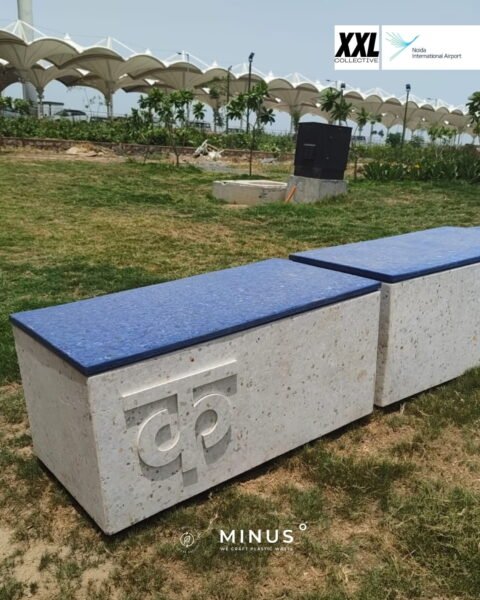
Sustainable Airport Infrastructure Without Compromising Design
One of the biggest misconceptions about recycled materials is that sustainability comes at the expense of aesthetics.
The Noida International Airport seating modules challenge that perception.
Each module has been carefully designed to complement the airport’s modern architectural language while celebrating the unique visual character of recycled materials.
The result is infrastructure that is not only functional but also serves as a visible reminder that sustainability and premium design can coexist.
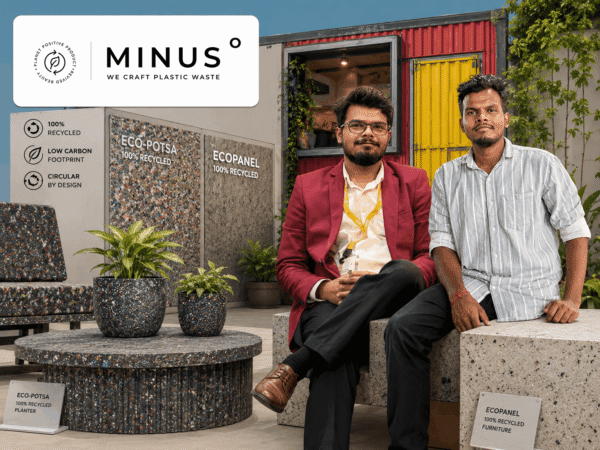
A Milestone for Minus Degre
For Minus Degre, this project represents more than a manufacturing achievement.
It validates a belief that has guided our work since day one:
Waste is not a problem to be hidden. It is a resource waiting to be redesigned.
Over nearly six months of material development, manufacturing, finishing, and installation, our team worked to ensure that every seating module met the performance standards expected from world-class public infrastructure.
Today, thousands of travelers interact with these installations without realizing they are sitting on materials that once existed as automotive components and electronic waste.
That transformation is the true power of design-led recycling.
Building the Future with Recycled Materials
The Noida International Airport project demonstrates how sustainable public furniture can play a meaningful role in shaping greener cities and infrastructure systems.
It proves that recycled materials are no longer niche alternatives—they are capable of delivering the durability, functionality, and design quality demanded by modern infrastructure.
As India moves toward a more resource-efficient and low-carbon future, projects like this provide a blueprint for how waste can become an asset.
At Minus Degre, we remain committed to pushing the boundaries of material innovation and proving that recycled materials can be sustainable, beautiful, and built to last.
Because the future of infrastructure should not come from extracting more resources.
It should come from reimagining the ones we already have
Frequently Asked Questions (FAQs)
1. What is the Minus Degre x Noida International Airport project?
Minus Degre designed and manufactured 90+ seating modules and 2 information plaq for the Arrival Zone of Noida International Airport using 100% recycled polycarbonate waste. The project demonstrates how plastic waste can be transformed into durable, beautiful, and sustainable public infrastructure.
2. What materials were used to manufacture the seating modules?
The seating modules are made from recycled polycarbonate waste sourced from two industrial waste streams. The top surface is manufactured using discarded automotive backlight and mirror waste, while the bottom structure is made from recycled charger and adapter waste collected from electronic waste streams.
3. How much plastic waste was recycled in this project?
Each seating module contains approximately 150 kg of hard plastic waste. With more than 90 modules installed, the project has successfully diverted over 13.5 tonnes of plastic waste from landfills and transformed it into functional public infrastructure.
4. Why is recycled polycarbonate ideal for outdoor public furniture?
Recycled polycarbonate offers high impact resistance, UV resistance, weather durability, low maintenance requirements, and a long service life. These properties make it suitable for airports, parks, transit hubs, educational campuses, and other high-traffic outdoor environments.
5. How does this project support India’s sustainability goals?
The project supports India’s Swachh Bharat Mission, circular economy initiatives, and sustainable infrastructure goals by converting automotive and electronic waste into valuable public assets. It demonstrates how recycled materials can reduce landfill waste while contributing to durable, low-carbon infrastructure development.