What are recycled plastic products?
Recycled plastic products are materials and goods manufactured using post-consumer and post-industrial plastic waste instead of virgin resources. These products support the circular economy, enable waste reduction, create sustainable materials, and help industries adopt circular solutions for infrastructure, architecture, interiors, and public spaces.
Table of Contents
- India’s Plastic Challenge and Opportunity
- Why Circular Economy Matters
- Minus Degre: Transforming Plastic Into Possibilities
- ECO-PANELS: Sustainable Surface Innovation
- Technical Specifications for Architects
- Beyond Panels: Building Circular Products
- Case Study: Circular Retail Interiors
- The Engineering Behind the Circular Shift
- Future Trends in Plastic Recycling Innovations
- Why Governments and Corporates Are Adopting Circular Solutions
- FAQs
- Conclusion
India’s Plastic Crisis is Also a Material Opportunity
Every discarded wrapper, broken plastic object, multilayer packaging film, and industrial scrap carries two futures.
One ends in landfills.
The other becomes a material.
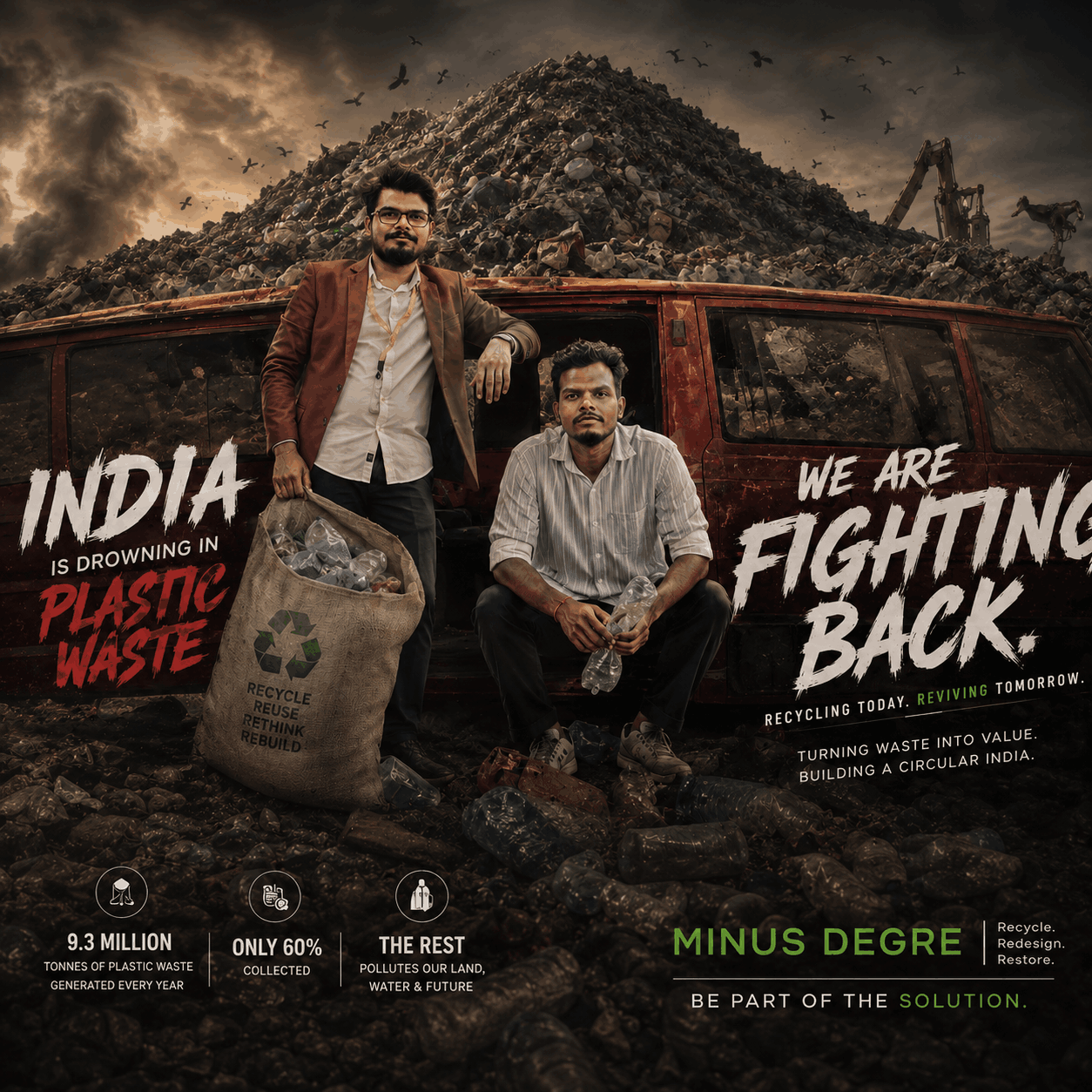
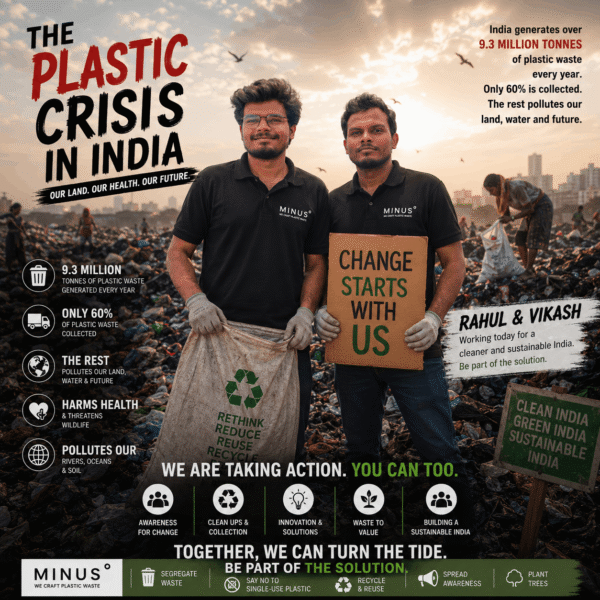
Globally, more than 400 million tonnes of plastic waste are generated annually, yet recycling rates remain significantly lower than required.
India faces the same challenge.
Rapid urbanization, consumption growth, and infrastructure expansion continue increasing waste generation while simultaneously increasing demand for materials.
This creates an important question:
Can waste become infrastructure?
Can discarded plastic become architecture?
Can plastic waste evolve into premium design?
At Minus Degre, this question became the foundation of the company.
Instead of treating plastic as waste, Minus Degre began viewing it as a raw material for the future.
The mission was simple:
Change the perception of plastic waste by converting it into premium products and sustainable materials.
Circular Economy — The Future of Manufacturing
Traditional manufacturing follows a linear model:
Take → Make → Dispose
Circular manufacturing follows:
Collect → Recycle → Rebuild → Reuse
This transition is known as the Circular Economy.
The circular economy keeps resources in use for longer periods while reducing landfill pressure and virgin resource dependency.
Key principles include:
Waste Reduction
Transforming waste streams into usable products.
Circular Solutions
Designing products that remain recyclable after use.
Second-Life Materials
Giving plastic multiple lifecycles.
Zero Waste Initiatives
Supporting long-term sustainability systems.
This transition is accelerating demand for:
- Recycled plastic products
- Sustainable materials
- Green architecture systems
- Circular infrastructure
- Sustainable furniture
- Eco-friendly products
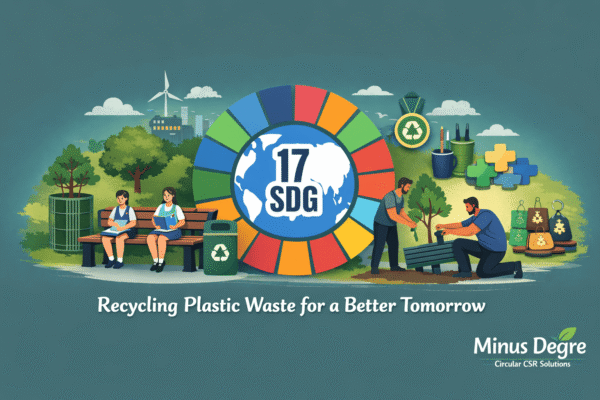
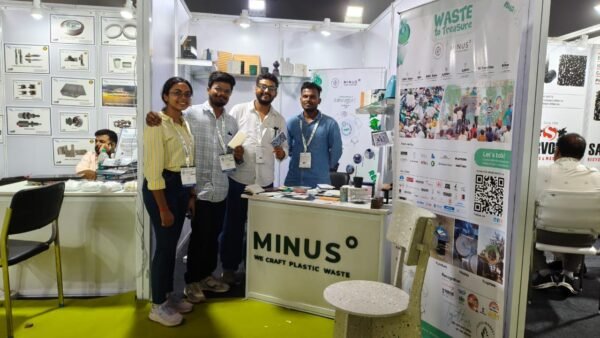
Minus Degre — Reimagining Plastic Waste in India
Minus Degre is an Indian recycled plastic manufacturing company creating premium products and materials from post-consumer and post-industrial plastic waste.
Operating from Delhi NCR with manufacturing expansion in Ghaziabad, Minus Degre develops products for:
✔ Architects
✔ Interior Designers
✔ Retail Brands
✔ Corporates
✔ Government Projects
✔ NGOs
✔ Schools
✔ Sustainability Leaders
Today, the company manufactures:
- ECO-PANELS
- Recycled plastic sheets
- Sustainable furniture
- Park benches
- Public dustbins
- Eco-gifting products
- Recycled trophies and medals
- Wall cladding systems
- School furniture
- Circular infrastructure products
Each product begins with waste.
Each product ends with purpose.
ECO-PANELS — Sustainable Surface Innovation for Green Architecture
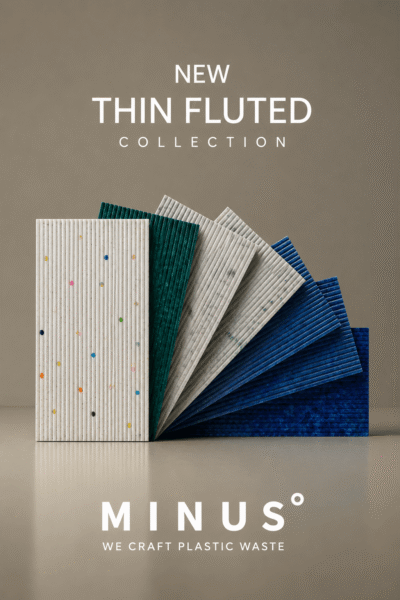
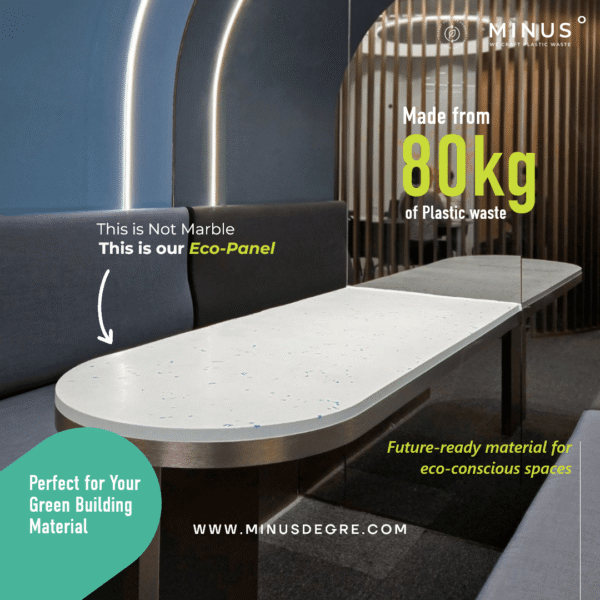
One of Minus Degre’s flagship innovations is ECO-PANELS — premium recycled panels manufactured using plastic waste streams.
Designed for architects, retail brands, and interior designers, ECO-PANELS convert discarded plastics into functional surface materials.
Applications include:
- Retail interiors
- Wall cladding
- Furniture surfaces
- Retail display systems
- Store fixtures
- Experience centers
- Sustainable infrastructure projects
For designers seeking green architecture materials, ECO-PANELS offer an alternative to conventional materials while supporting circularity goals.
Technical Specifications for Architects & Green Building Consultants
| Property | Specification / Value |
|---|---|
| Material Base | 100% Recycled Polystyrene (PS) / Polyethylene (PE) |
| Standard Sizes | 3×3 ft and 8×4 ft panels |
| Thickness Options | 6mm, 12mm, 16mm, 20mm |
| Core Certifications | ZED Certified (Zero Defect Zero Effect) |
| Performance Traits | 100% Waterproof, Termite-Proof, Medium Scratch Resistance |
| End Applications | Retail Interiors, Wall Cladding, Furniture, Display Systems |
| Circularity | 100% Recyclable / Second-Life Material |
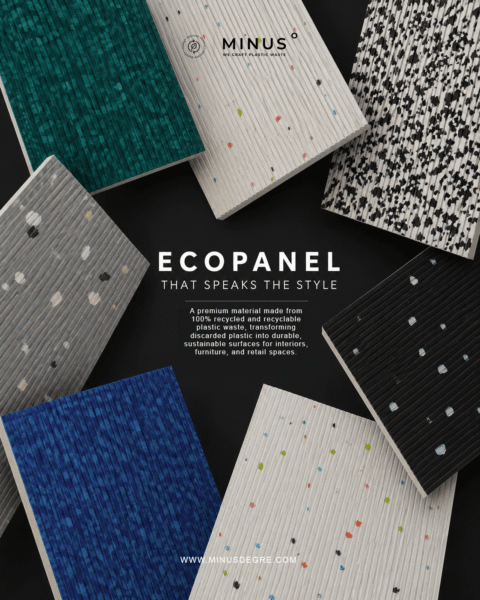
Benefits of ECO-PANELS
✓ Sustainable materials for green projects
✓ Alternative to virgin material dependency
✓ Waterproof performance
✓ Recyclable lifecycle
✓ Circular material implementation
✓ Premium visual appearance
Target Commercial Keywords:
recycled plastic sheets India, eco-panels India, recycled panels manufacturer, sustainable wall cladding India, green building materials India
Beyond Panels — Building Products That Change Communities
Plastic waste can become more than surfaces.
At Minus Degre, waste becomes community infrastructure.
The company manufactures:
Sustainable Furniture
School desks, seating systems, and community furniture.
Public Infrastructure Products
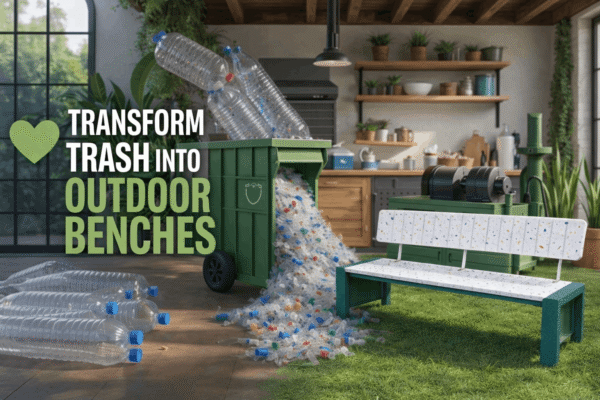
Park benches, waste bins, outdoor installations, and civic utilities.
Eco-Friendly Products
Corporate gifting products, souvenirs, awards, and promotional materials.
Circular Design Solutions
Retail installations, experiential products, and branded sustainability projects.
This transforms recycling from waste management into design innovation.
Imagine sitting on a bench that once existed as discarded plastic wrappers.
That is circular manufacturing in action.
Case Study — Circular Retail Interiors Powered by ECO-PANELS
Project Objective
A retail outlet wanted premium interior finishes while reducing environmental impact and dependency on conventional material systems.
Traditional MDF solutions carried higher embodied impact and lacked circularity.
Minus Degre introduced ECO-PANELS manufactured from recycled plastic waste.
Implementation areas included:
- Retail wall cladding
- Display elements
- Interior branding features
- Furniture surfaces

The Metric Impact
By integrating ECO-PANELS into the retail interior system, the project successfully diverted approximately 120,000 single-use plastic wrappers from Delhi NCR waste streams.
Instead of entering landfill pathways, these materials were transformed into premium architectural applications.
Compared to conventional MDF installations, the interior fit-out achieved an estimated 35% lower upfront material carbon footprint while maintaining premium aesthetics and durability.
Project outcomes:
✓ 120,000+ wrappers diverted
✓ Reduced virgin material usage
✓ Circular material storytelling integrated into retail experience
✓ Lower embodied impact compared to standard fit-outs
This project demonstrates how plastic recycling innovations can move from recycling plants into premium commercial environments.
The Engineering Behind the Circular Shift
Behind every ECO-PANEL, recycled bench, trophy, and infrastructure product is a combination of engineering, manufacturing, and design thinking.
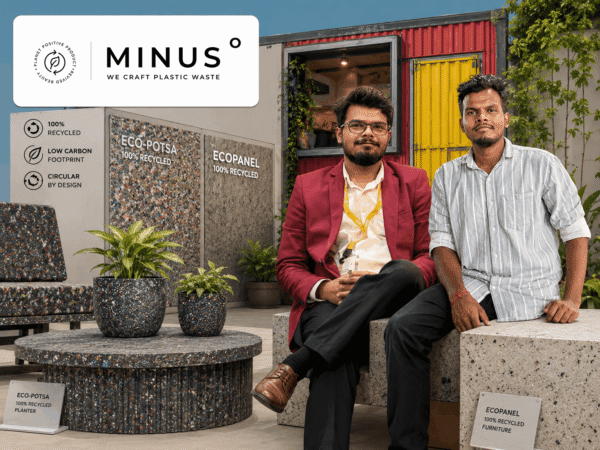
Minus Degre was built through multidisciplinary leadership.
The company was co-founded by professionals combining:
Mechanical Engineering expertise from IIT Delhi, bringing manufacturing systems understanding, process innovation, and material engineering.
Alongside this came visual design leadership from NIFT, integrating aesthetics, retail experience development, and premium product storytelling.
This engineering-design combination helped redefine waste.
Plastic stopped being disposal material.
It became architecture.
It became interiors.
It became infrastructure.
Today Minus Degre develops solutions for:
- Sustainable retail interiors
- Green architecture projects
- Circular gifting systems
- Public infrastructure
- Educational furniture
- Recycled surface materials
The result is a manufacturing ecosystem where material science meets design.
Future Trends Shaping Plastic Recycling Innovations
The future of recycled manufacturing is changing rapidly.
Emerging trends include:
Circular Infrastructure
Cities adopting recycled public assets.
Green Architecture
Demand for sustainable wall cladding and circular materials.
Smart Recycling Systems
Technology-enabled segregation and processing.
Carbon-Aware Construction
Selection of lower-impact materials.
Second-Life Materials
Products designed for multiple lifecycles.
The future will not eliminate plastic.
It will redesign it.
Why Governments, CSR Teams and Corporates Are Adopting Circular Solutions
Sustainability has moved beyond CSR.
It is becoming infrastructure strategy.
Recycled products support:
- ESG targets
- Circular economy goals
- Waste reduction initiatives
- Zero waste programs
- Community infrastructure projects
Applications include:
✔ School furniture
✔ Public benches
✔ Dustbins
✔ Eco-gifting products
✔ Awareness installations
✔ Community infrastructure assets
Every installation becomes both product and education.
FAQs
What are recycled plastic products?
Products manufactured using recycled plastic waste instead of virgin raw materials.
What are ECO-PANELS?
ECO-PANELS are premium recycled surface materials developed by Minus Degre for architecture, interiors, and retail projects.
Can recycled plastic be used in infrastructure?
Yes. Recycled plastics are increasingly used in furniture, benches, dustbins, school products, and public infrastructure.
Are ECO-PANELS waterproof?
Yes. ECO-PANELS are waterproof and designed for long-term applications.
Does Minus Degre manufacture sustainable gifting products?
Yes. Minus Degre develops recycled trophies, medals, souvenirs, and eco-gifting solutions.
Internal Linking Opportunities
Suggested Internal Pages
→ ECO-PANELS by Minus Degre
→ Recycled Plastic Sheets Manufacturing
→ Sustainable Corporate Gifting Products
→ Recycled Trophies & Medals
→ Circular Infrastructure Solutions
→ Sustainable School Furniture
→ Retail Interior Solutions
Conclusion: Waste is No Longer the End of the Story
The future question is not:
Can plastic be recycled?
The real question is:
What can plastic become?
At Minus Degre, plastic waste becomes:
Architecture.
Furniture.
Retail experiences.
Infrastructure.
Community products.
Possibilities.
Through recycled plastic products, circular economy systems, plastic recycling innovations, and green architecture materials, Minus Degre is helping reshape India’s material future.
Minus Degre – Turning Plastic Waste Into Possibilities.
Serving India | Delhi NCR | Ghaziabad | Noida | Gurgaon | Bangalore