
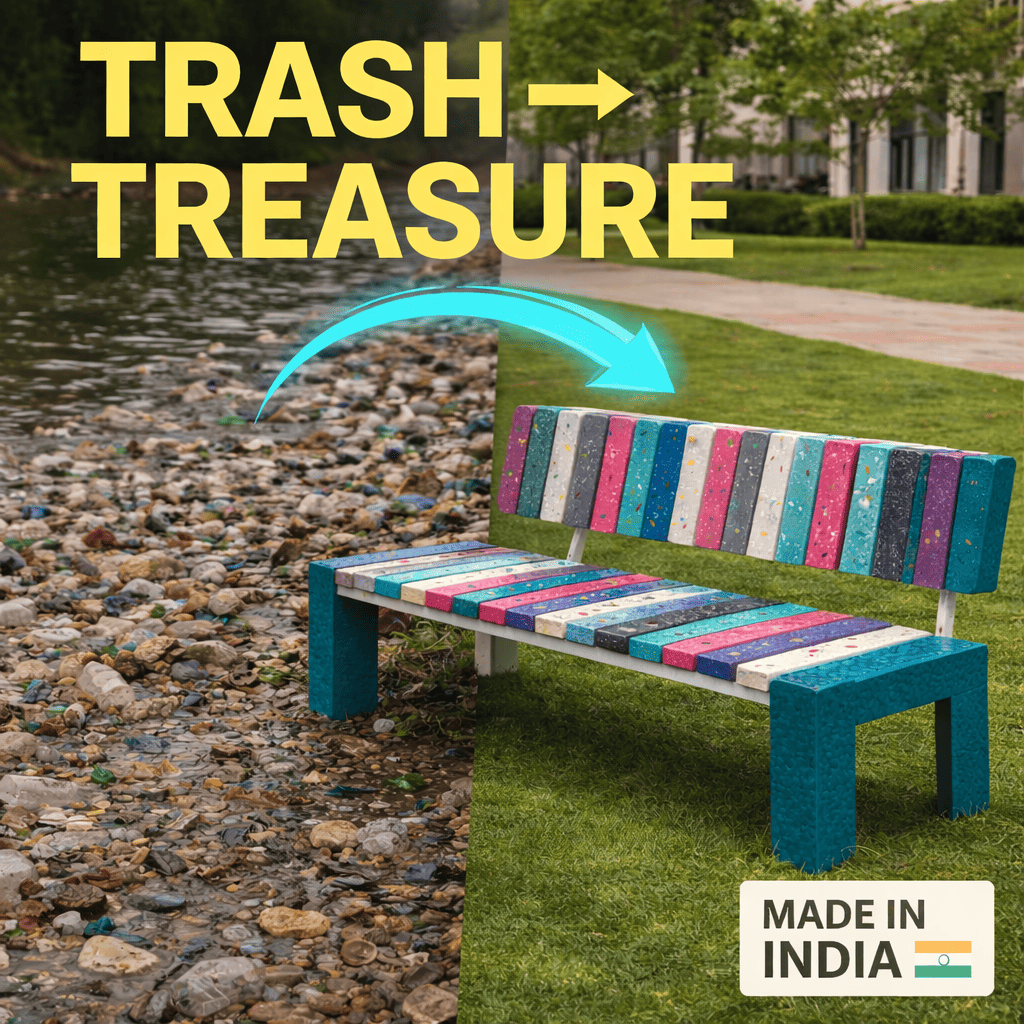
⚡Why Recycled Benches Matter
-
Recycled plastic benches convert waste into long-lasting public infrastructure
-
Made from rHDPE (Recycled High-Density Polyethylene) and rPS
-
Last 15–25 years with near-zero maintenance
-
Ideal for Smart Cities, Schools, Corporate Campuses & CSR Projects
-
Reduce landfill waste, carbon footprint, and life-cycle costs
-
Support sustainability frameworks like IGBC Green Building and UN SDGs
-
Proven real-world impact in airports, parks, and corporate campuses
👉 Recycled benches are not furniture — they are climate infrastructure.
♻️ What Is a Recycled Plastic Bench Made Of?
Modern high-performance recycled benches are manufactured using:
-
rHDPE (Recycled High-Density Polyethylene)
-
Post-consumer plastic waste (bottles, packaging, industrial scrap)
-
Thermo-compressed structural panels
Unlike conventional outdoor furniture, rHDPE benches are:
✔ UV stabilized
✔ Heat resistant
✔ Waterproof
✔ Termite proof
✔ Rust proof
✔ Structurally reinforced
This transforms plastic waste into long-life circular economy infrastructure.
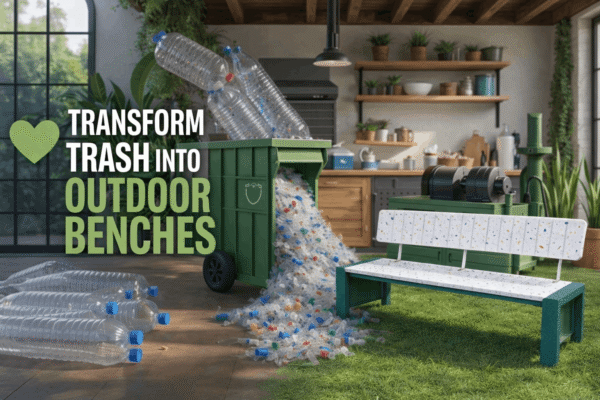
Why Smart Cities, Schools & CSR Managers Prefer Recycled Benches
✔ Smart Cities
-
Zero maintenance infrastructure
-
Reduced life cycle cost (LCC)
-
Sustainable urban planning compliance
✔ Schools & Universities
-
Safe and splinter-free
-
Long-term durability
-
Weather resistant
✔ CSR Managers
-
Measurable waste diversion
-
Visible sustainability impact
-
ESG reporting metrics
-
SDG alignment
Recycled material use contributes to green building certification under the
👉 Indian Green Building Council (IGBC) official website: https://igbc.in
Circular infrastructure also aligns with global sustainability frameworks such as
👉 United Nations Sustainable Development Goals (SDGs): https://sdgs.un.org/goals
How Long Do Recycled Plastic Benches Actually Last?
High-quality rHDPE recycled benches can last:
👉 15–25 years outdoors
👉 With minimal maintenance
👉 Without repainting, sealing, or replacement cycles
They resist UV exposure, extreme heat, heavy rainfall, and structural fatigue.
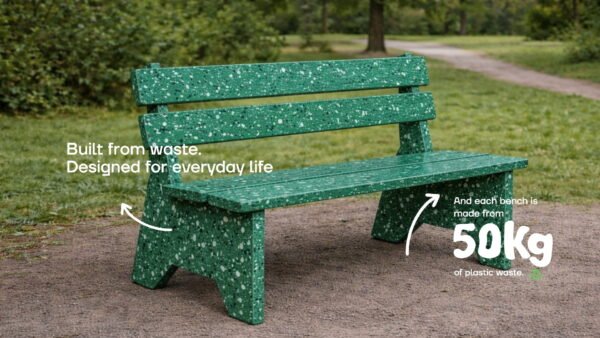
📊 Comparison: Wooden vs Metal vs Recycled Outdoor Benches
| Feature | Wooden Outdoor Bench | Metal Outdoor Bench | Recycled rHDPE Bench |
|---|---|---|---|
| Look & Finish | Natural aesthetic | Industrial | Modern, customizable |
| Strength | Moderate | High | High |
| UV Resistance | Low | Medium | High |
| Heat Resistance | Moderate | Gets very hot | Heat stable |
| Waterproof | No | Rusts | 100% |
| Termite Proof | No | Yes | Yes |
| Comfort | Good initially | Hard & hot | Ergonomic options |
| Maintenance | High | Medium | Very Low |
| Carbon Reduction | Negative (deforestation) | High embodied energy | Positive (waste reuse) |
| Carbon Sequestration in Manufacturing | None | None | Indirect waste locking |
| Performance in Indian Heat / Monsoon | Swelling, cracking, rot | Corrosion risk | Stable, weatherproof |
| 10-Year Life Cycle Cost (LCC) | High | Medium | Lowest |
📢 Impact Callout — Real Environmental Numbers
1 Minus Degre Bench = 50 kg of plastic diverted from landfill.
How much plastic can your campus, city, or CSR project recover?
👉 Contact us for a customized Impact Report.
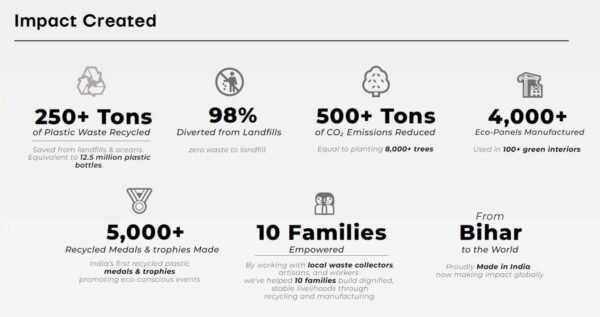
📍 Mini Case Study: Circular Infrastructure in Action
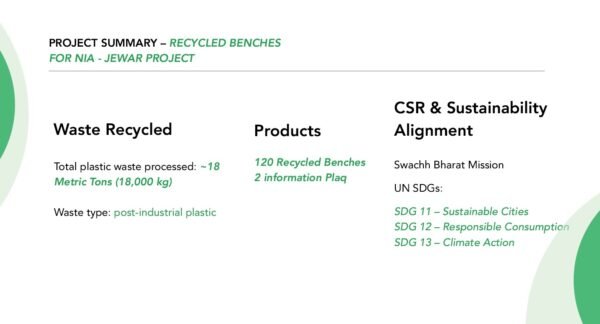
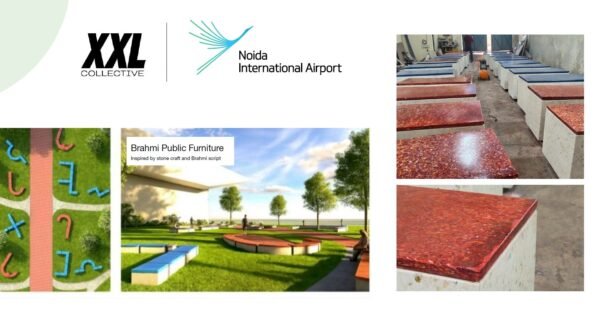
✈️ Noida International Airport — Brahmi Park Installation
A large-scale outdoor sustainability initiative deployed:
-
100+ recycled outdoor furniture units
-
5000+ kg plastic waste diverted
-
Long-life public infrastructure created
-
Visible environmental impact for visitors
Instead of becoming landfill waste, plastic was transformed into functional seating infrastructure.
This is circular economy infrastructure at real scale.
🏢 HCL ReCity — Corporate Circular Campus
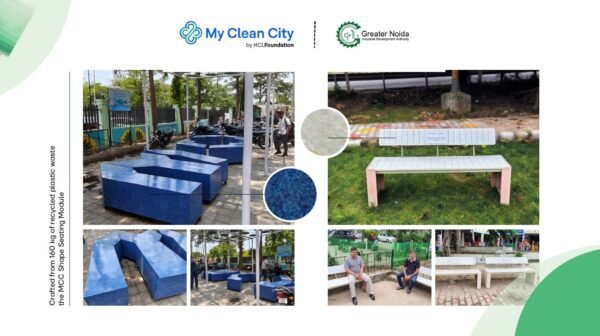
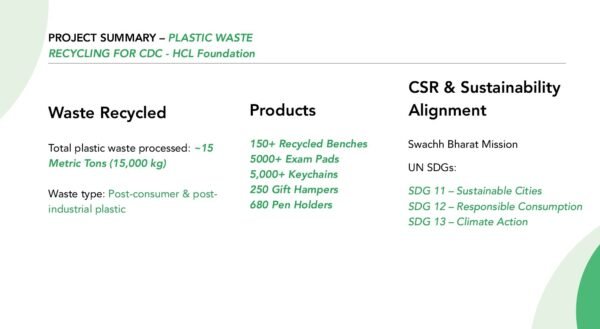
HCL’s sustainability initiative integrated recycled benches to support:
✔ ESG alignment
✔ Waste recovery metrics
✔ Visible sustainability storytelling
✔ Long-term environmental assets
CSR shifted from donation to infrastructure legacy.
🌍 Circular Economy Infrastructure: Beyond Furniture
Recycled benches support:
-
Waste-to-resource systems
-
Sustainable procurement
-
Carbon footprint reduction
-
Extended Producer Responsibility (EPR)
-
Climate-aligned urban development
They represent infrastructure that actively reduces environmental burden.
🏆 Why Minus Degre Recycled Benches Are Built Differently
Minus Degre manufactures architectural-grade recycled outdoor infrastructure using high-compression recycled panels.
✔ 100% recycled & recyclable
✔ rHDPE and rPS engineered strength
✔ Designed for public infrastructure scale
✔ Customizable for smart city planning
✔ Built for long life cycle performance
Mission: convert plastic waste into climate-positive infrastructure.
📌 Frequently Asked Questions
What is a recycled plastic bench made of?
rHDPE derived from post-consumer plastic waste.
How long do recycled outdoor benches last?
Typically 15–25 years outdoors.
Are recycled benches suitable for CSR projects?
Yes — they provide measurable environmental impact and SDG alignment.